Understanding Climate Zone 4A and Greensboro's Humidity Challenge
Greensboro sits squarely in Climate Zone 4A, a region characterized by warm, humid summers and mild winters. This climate classification comes with a specific set of challenges for homeowners, especially those with crawl spaces. The combination of seasonal humidity swings, ground moisture, and inadequate ventilation creates an environment where moisture accumulates faster than it can escape.
The problem starts underground. Crawl spaces are naturally prone to moisture intrusion because they sit directly on or near the soil. In Climate Zone 4A, the warm outdoor air meets cool crawl space surfaces, creating condensation. This moisture feeds mold growth, wood rot, and structural damage. Many homeowners don't realize their crawl space issues until they notice sagging floors, musty odors, or visible mold on rim joists and wooden supports. By that point, the damage is already underway.
Traditional vented crawl spaces were once considered the standard solution, but modern building science has proven they actually make the humidity problem worse in warm, humid climates. Outdoor air enters through foundation vents, bringing moisture directly into the space. This is why contacting a professional to assess your crawl space is so important. The stakes are higher than most homeowners realize.
Why Crawl Space Spray Foam Is the Best Insulation for Crawl Space Protection
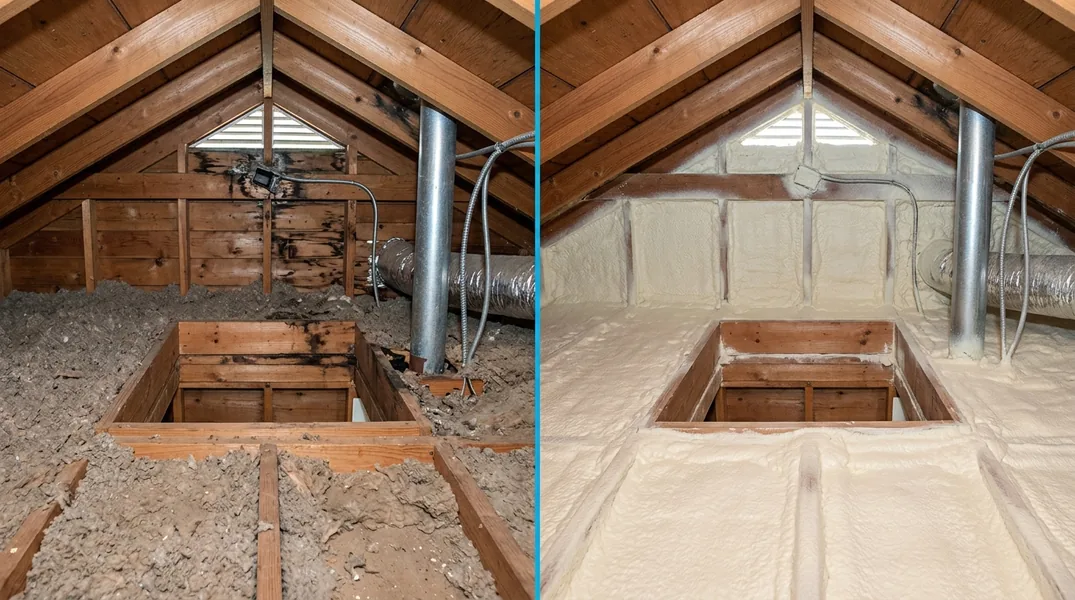
Kernersville and surrounding areas have seen a dramatic shift toward spray foam solutions, and for good reason. Closed Cell Spray Foam Insulation applied to crawl space walls and band joists creates an air-tight thermal barrier that traditional fiberglass batts simply cannot match. Unlike fiberglass, which absorbs moisture and loses its R-value when damp, closed cell foam repels water and maintains its insulating properties even in high-humidity environments.
The science is straightforward. Closed cell spray foam has a density of approximately 1.5 to 2 pounds per cubic foot, creating a vapor barrier that stops moisture migration before it starts. When applied to the interior walls of your crawl space foundation, it seals every crack, gap, and penetration. This means conditioned air from your home stays inside, unconditioned air stays out, and ground moisture cannot easily enter. The result is a drier, more energy-efficient crawl space that protects your home's structural integrity and your family's health.
Unlike Open Cell Spray Foam Insulation, which is more permeable and better suited for interior walls, closed cell foam is the industry standard for crawl spaces in humid climates. It also provides structural reinforcement to rim joists and band boards, adding lateral support to your home's foundation.
Pier and Beam Insulation Near Me: Protecting Your Home's Foundation
Homes built on pier and beam foundations are especially vulnerable to humidity-related damage in Climate Zone 4A. These foundations elevate the structure above the ground, creating a large open crawl space underneath. Without proper insulation, this space becomes a thermal liability and a moisture magnet. Cold air circulates freely beneath the home in winter, making floors above feel drafty and cold. In summer, warm, humid air infiltrates the space, promoting mold and pest activity.
Pier and beam insulation requires a specialized approach. Traditional fiberglass blankets between floor joists fail because they sag when exposed to moisture, leaving gaps that compromise their R-value. Spray foam, by contrast, adheres directly to the underside of your floor system and creates a continuous thermal envelope. When combined with proper sealing of the band joist and foundation walls, spray foam transforms a cold, damp pier and beam crawl space into an insulated, protected zone. Homeowners in Burlington and throughout the region have reported warmer floors, lower heating and cooling costs, and elimination of musty odors within weeks of having spray foam applied.
The investment in pier and beam insulation pays dividends. Not only do you gain immediate comfort improvements, but you also extend the lifespan of your home's structural components. Wood that stays dry lasts decades longer than wood exposed to constant moisture.
Cold Floors Insulation: Why Your Feet Tell the Real Story
One of the first signs that your crawl space insulation is failing is cold floors. If you're wearing socks indoors during winter, or if your upstairs rooms feel noticeably colder than downstairs, your crawl space is likely losing conditioned air. Cold floors are not just a comfort issue. They indicate that your HVAC system is working overtime to maintain temperature, driving up your energy bills unnecessarily.
Cold floors happen because uninsulated or poorly insulated crawl spaces allow heated air to escape during winter and unconditioned air to infiltrate during summer. The thermal bridge between your living space and the crawl space is direct and significant. When you apply spray foam insulation to crawl space walls, band joists, and rim boards, you break that thermal bridge. The result is warmer floors, more consistent room temperatures, and measurable energy savings on your monthly utility bills.
Many homeowners are surprised to learn that improving their crawl space insulation can reduce heating and cooling costs by 10 to 20 percent. In a region like Greensboro, where air conditioning runs for much of the year, that savings adds up quickly. If you're experiencing cold floors, a professional crawl space assessment is your first step toward a solution.
Crawl Space Spray Foam Installation: What the Process Looks Like
Understanding what happens during a crawl space spray foam installation can help you feel confident in your decision. The process begins with a thorough inspection of your crawl space. A technician will assess moisture levels, identify any existing mold or damage, and determine the best application strategy. In most cases, the crawl space must be cleaned and dried before foam application. Any standing water, debris, or organic material should be removed to ensure the foam adheres properly and creates an effective barrier.
Once the space is prepared, spray foam is applied to the interior walls of the foundation, the band joist (the rim board where your home's walls meet the foundation), and any other areas where air leakage or moisture intrusion occurs. The foam expands as it cures, filling gaps and creating a monolithic, seamless barrier. The entire process typically takes one to three days, depending on the size of your crawl space. After curing, the foam can be left exposed or covered with a fire-rated barrier, depending on local building codes and your preference.
The result is a crawl space that is sealed, insulated, and protected against the humidity challenges that plague Climate Zone 4A. If you're ready to take this step, contact Greensboro Spray Foam Insulation at (336) 833-1513 to schedule your free estimate. Our team has the expertise to transform your crawl space from a liability into an asset.
Crawl Space Insulation Cost in Greensboro: What to Budget
Cost is a legitimate concern for any home improvement project. The pricing for crawl space spray foam insulation varies based on several factors, including the size of your crawl space, the extent of existing damage, whether moisture remediation is needed, and the type of foam you choose. Closed cell spray foam is more expensive per board foot than open cell foam, but its superior moisture resistance and durability make it the better choice for crawl spaces in humid climates.
On average, homeowners in Greensboro can expect to invest between $1,500 and $4,000 for a typical crawl space insulation project. Larger homes or those requiring extensive cleanup and moisture remediation may cost more. However, this investment typically pays for itself within five to ten years through energy savings alone. When you factor in the prevention of structural damage, mold remediation, and potential foundation repair costs, the ROI becomes even more compelling.
The best way to understand your specific costs is to request a free estimate from Greensboro Spray Foam Insulation. Our team will evaluate your crawl space, answer your questions, and provide a detailed quote with no obligation. Call (336) 833-1513 today to get started.
Looking for a professional spray foam insulation contractor in Greensboro? Greensboro Spray Foam Insulation responds fast for all your spray foam insulation needs.
Get a Free Quote