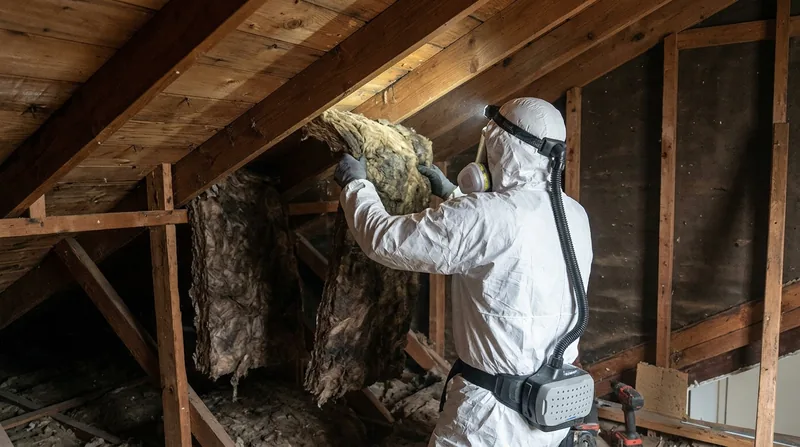




Insulation Removal in Greensboro is the essential first step before any spray foam retrofit. Old attic and crawl space insulation in the Piedmont holds moisture from humid summers and damp winters, trapping odor and decay into the substrate. We remove it completely from the attic plane or crawl space before new foam goes in, so moisture, smell, and failed material do not carry forward into your new system. Greensboro's mix of 1920s bungalows, mid-century brick ranches, and newer two-story homes all share the same problem: insulation that absorbs and holds water instead of shedding it. That moisture drives cooling bills in summer and heating bills in winter, and it makes new foam work pointless if the old material stays behind. We remove it, inspect the substrate, and build clean.
Why Insulation Removal Matters in Greensboro's Humid Climate
Greensboro sits in IECC climate zone 4A, mixed-humid Piedmont, where summer thunderstorms and winter damp create a two-way moisture problem. Fiberglass batts and blown-in cellulose installed decades ago absorb that moisture and never fully dry. By the time you notice musty air, soft spots in the insulation, or mold discoloration on the attic sheathing, the material has already failed. New foam sprayed over wet or contaminated insulation locks that moisture in and creates a bigger problem. Removal is not optional; it is the foundation of a retrofit that holds.
- Old insulation traps moisture and odor that foam cannot seal away or fix.
- Wet fiberglass and cellulose lose R-value and harbor mold growth in high-humidity zones.
- Removal allows us to inspect the substrate, repair any roof leaks or water damage, and start fresh.
- A clean attic or crawl space lets foam adhere properly and perform as designed.
Removing the failed material before new foam goes in is the mark of a contractor who understands the Piedmont climate and the trade itself.
Key info: Greensboro's red clay crawl spaces breathe humid outside air under the floor all summer, then moisture drives upward in winter. Old insulation installed over that damp earth absorbs water continuously. Removal and replacement with closed cell foam is the only lasting fix for those spaces.
For more on how spray foam handles moisture in crawl spaces, see our Crawl Space Spray Foam Insulation page.
North Carolina's building code requires that any insulation contractor follow the state energy code in force at your address. The local building department in Greensboro, High Point, or whichever city you are in will have specific rules about attic ventilation, thermal barriers, and ignition barriers once foam is installed. We help you understand what applies to your property, but the building official is the authority. For details on your city's requirements, contact your local building and planning department or visit the North Carolina Building Code Official website.
How We Remove Insulation in Greensboro Attics and Crawl Spaces
Insulation removal is methodical work. We contain the space, extract the old material safely, dispose of it properly, inspect the substrate for damage or contamination, and prepare the surface for new foam. In attics, we remove fiberglass batts, blown-in cellulose, or failed foam from the attic plane, band joists, and rim joists. In crawl spaces, we remove batts or blown-in material from the rim band, the band joist, and sometimes the floor joists themselves. We use HEPA-filtered vacuum equipment to minimize dust and odor, and we follow North Carolina waste disposal rules for the removed material.
- We set up containment and mechanical ventilation to control dust and odor during removal.
- We extract all old insulation from the target zone and bag it for proper disposal.
- We inspect the substrate, sheathing, and framing for moisture damage, mold, or structural issues.
- We identify and flag any roof leaks, plumbing penetrations, or HVAC ductwork that needs attention before foam is applied.
- We clean and prepare the surface so new foam adheres properly and performs at rated R-value.
Once the substrate is clean and dry, we are ready to spray new foam and seal the space air-tight.
Example: A 1950s brick ranch in Lindley Park has fiberglass batts in the attic and blown-in cellulose in the crawl space. The attic sheathing shows water stains along the eaves, and the crawl space smells musty. We remove both the batts and the cellulose, inspect the roof line and the band joist, identify a gutter failure and a missing soffit vent, and repair those before spraying closed cell foam. The homeowner gets a dry, sealed space and a bill that reflects the real scope.
For details on the next step after removal, see our Attic Spray Foam Insulation page.
Insulation Removal Methods and Best Uses
| Method | Description | Best For |
|---|---|---|
| Fiberglass Batt Removal | Hand removal of loose or degraded batts from attic floor joists and rim joists, with HEPA containment. | Older Greensboro bungalows and ranches with visible batts; fast, clean removal before foam. |
| Blown-In Cellulose Extraction | Vacuum extraction of loose-fill cellulose from attics and crawl spaces, with dust control and proper bagging. | 1970s and 1980s attics with blown-in material; crawl spaces with settled or damp cellulose. |
| Failed Spray Foam Removal | Mechanical removal of deteriorated or improperly installed spray foam, with substrate inspection and cleanup. | Previous foam jobs that failed due to moisture, poor installation, or incomplete coverage; full re-foam retrofit. |
| Selective Removal and Top-Up | Removal of degraded insulation from specific zones (rim band, band joist, cold spots) while sound insulation remains in place. | Partial retrofits where attic insulation is adequate but crawl space or rim joist needs foam sealing. |
Insulation Removal Cost in Greensboro: What to Expect
The cost of insulation removal in Greensboro starts at $950 for a small attic or crawl space zone and scales with the square footage, material type, and substrate condition. A full attic removal on a 2,000-square-foot house typically runs $1,500 to $3,500 depending on the depth and density of the material and whether water damage or mold flagging requires extra care. Crawl space removal costs more because of the tight access, the moisture hazard, and the disposal logistics, but the price is still driven by the size of the space and the condition of the material.
Factors that affect the final cost include the volume of material to remove, the accessibility of the space (tight crawls or blocked attics cost more), whether the substrate needs repair before foam is applied, and whether the old material is contaminated or contains hazardous material. A free estimate at (336) 833-1513 will give you a firm price once we see the job. For a full pricing overview and service area details, visit our Pricing page.
Getting two or three estimates from local contractors is smart. Look for estimates that itemize removal, substrate inspection, and any repairs needed before new foam is installed. A low-ball estimate with no detail is a warning sign; a real estimate will include R-value and thickness specs for the new foam and a clear scope of what is included in the removal.
What to Look for When Hiring an Insulation Contractor Near Greensboro
Hiring the right contractor for insulation removal is as important as hiring the right contractor for the foam itself. The market includes rig-and-run crews that spray a job in an afternoon and disappear, national franchises that may not understand the Piedmont climate, and local independents who know the local building codes and the moisture problems that drive the work. Ask any contractor you are considering to verify their insurance, provide references from recent jobs in Greensboro or nearby towns like High Point, Kernersville, or Winston-Salem, and explain their approach to substrate inspection and preparation. Insulation removal should be itemized separately from the new foam installation, with a clear price and timeline.
- Verify that the contractor is fully insured and can provide a current certificate of insurance.
- Ask for written references from at least three recent jobs in your area and follow up with the homeowners.
- Request a detailed estimate that breaks down removal, inspection, substrate repair, and new foam separately.
- Check that the contractor understands local building codes and can explain what permits or inspections apply to your property.
- Confirm that the contractor will inspect the substrate for moisture, mold, or damage before foam is sprayed.
A contractor who takes time to understand your space, inspects thoroughly, and explains the work clearly is the one to hire. For a free estimate and to discuss your insulation removal needs, contact us today.
Insulation Removal in Greensboro: Pricing Guide
| Service | Price | Details |
|---|---|---|
| Small attic or crawl space removal | Starting at $950 | Removal of old insulation from limited zone, 200 to 400 square feet, with basic substrate inspection |
| Full attic removal | Starting at $1,500 | Complete removal of fiberglass or blown-in material from attic plane and band joists on typical two-story home |
| Crawl space removal | Starting at $2,000 | Removal from rim band and band joist, tight access and moisture hazard increase labor and disposal cost |
| Failed foam or contaminated material removal | On estimate | Removal of degraded spray foam or material with mold flagging requires site inspection before final price |
| Travel | Included | No separate mileage fee for Greensboro, High Point, Kernersville, Winston-Salem, or surrounding service areas |
| Free estimate | No charge | Response within 24 hours at (336) 833-1513; written estimate includes R-value and thickness specs for new foam |
Indicative pricing, the exact cost depends on square footage, finish, and site access. Free personalized estimate within 24h at (336) 833-1513.


