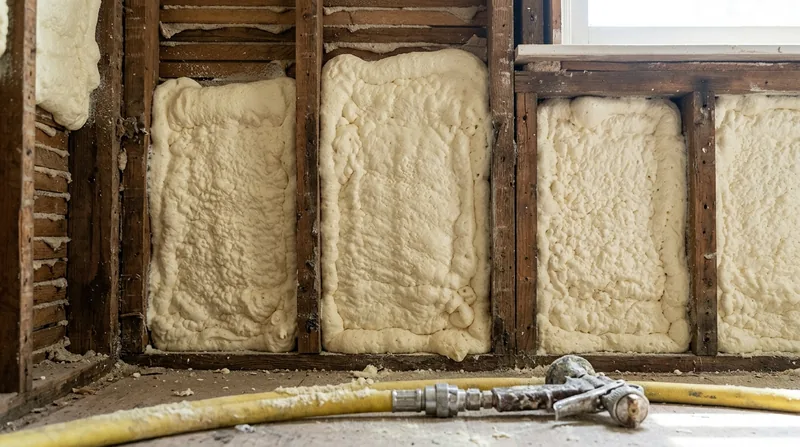




Open Cell Spray Foam Insulation in Greensboro fills the wall cavities in Fisher Park bungalows and Lindley Park mid-century ranches where original plaster and brick hide little or no insulation. In this mixed-humid Piedmont climate, where summer humidity and winter cold drive moisture in opposite directions each season, open cell foam air seals without trapping water vapor the way closed cell does. That moisture permeability makes it the right choice for Greensboro's older housing stock, where the walls need to breathe. If your 1920s or 1930s bungalow has cold exterior walls in winter, drafts around windows, or rooms that refuse to heat evenly, open cell spray foam and the air sealing around it can transform comfort and cut the load on your HVAC system. We help homeowners across Greensboro, High Point, Kernersville, and Jamestown understand which insulation method fits their house, their climate, and their budget.
Why Open Cell Spray Foam Matters in Greensboro's Older Homes
Greensboro's residential character is built on its 1920s and 1930s bungalows, many of them in Fisher Park and Irving Park with plaster walls and brick exteriors that were never insulated. Mid-century ranches in Lindley Park and Sunset Hills added some fiberglass batts, but most cavities remain thin or empty. The Piedmont's humid summers and cool winters create a seasonal moisture swing that generic insulation cannot handle. Fiberglass batts allow air to move freely through them, so they do not actually seal the wall cavity. Open cell foam fills every void, seals air leaks, and lets moisture vapor pass through when it needs to, which is exactly what a 1920s wall in Greensboro requires.
- Open cell foam expands to fill irregular cavities and gaps that fiberglass batts miss entirely.
- The material air seals the wall cavity without blocking vapor movement, critical in mixed-humid climates.
- Retrofit installation does not require wall demolition, preserving original plaster and trim in Fisher Park homes.
- Sound dampening is a secondary benefit, useful in homes near traffic or in multi-unit settings.
These characteristics make open cell spray foam the practical choice for retrofitting Greensboro's pre-1980 housing stock without tearing walls apart.
Key info: A Fisher Park bungalow built in 1935 typically has 2x4 stud cavities with plaster on the inside and brick on the outside, and nothing in between. Open cell foam fills that cavity completely, seals the rim joist and band joist where the wall meets the foundation, and allows the wall assembly to dry if moisture ever enters from the outside.
For more on how insulation fits into the broader air sealing strategy for your home, see our air sealing service page.
How We Install Open Cell Spray Foam in Greensboro Walls
Open cell retrofit installation in Greensboro starts with a site inspection to identify which walls are accessible, which cavities are clear of obstructions, and where air leaks are costing you the most. We cut small access holes in drywall or plaster, spray the foam from the bottom of the cavity upward, and allow it to cure before patching and finishing. The process takes one to three days depending on the wall footage and the number of cavities. Mechanical ventilation during cure and a re-entry window of twenty-four to forty-eight hours are non-negotiable, and we specify both in writing before we begin.
- We inspect the wall cavity for moisture, obstructions, and electrical runs before any foam enters.
- Access holes are cut at the bottom of the cavity and sealed after foam cures and is trimmed flush.
- Foam is applied in controlled passes to the manufacturer's thickness and density specifications.
- Mechanical ventilation runs during cure, and we provide a written re-entry timeline before work begins.
- We patch drywall or plaster and leave the wall ready for paint or finish.
The result is a sealed, insulated wall cavity that performs in Greensboro's seasonal humidity swings without trapping moisture.
Example: A Lindley Park ranch with exterior brick walls and single-pane windows gets open cell foam in six wall bays, plus rim joist sealing at the foundation line. Cold exterior walls disappear, and the home stays warmer in winter without the air stratification that central heating alone cannot fix. Total wall footage is about 400 board feet, plus rim joist work.
If your home also needs attic spray foam insulation, we can coordinate both projects to maximize efficiency and comfort.
Open Cell vs. Closed Cell: Which Is Right for Your Greensboro Home?
| Approach | R-Value & Density | Best for Greensboro |
|---|---|---|
| Open Cell Spray Foam | R-3.5 to R-3.8 per inch, semi-rigid, 0.5 to 1.5 lb/cu ft | Wall cavities in older homes, sound dampening, mixed-humid climates where vapor movement is necessary |
| Closed Cell Spray Foam | R-6 to R-7 per inch, rigid, 1.5 to 2.0 lb/cu ft | Metal buildings, metal roof decks, crawl spaces, and attics where vapor control and structural strength matter more than cost |
| Open Cell in Attics | R-3.5 per inch, vapor-open, lower cost per board foot | Unvented attics where drywall ceiling acts as vapor barrier, or vented attics as a cost-effective upgrade |
| Closed Cell in Attics | R-6 per inch, vapor-closed, higher cost per board foot | Sealed roof decks, cathedral ceilings, or attics with ductwork where maximum R-value in minimal depth is required |
Open cell spray foam is the lower-cost option and the right choice for most of Greensboro's wall retrofit work. Closed cell is thicker, denser, and more expensive, but it is the only choice for metal buildings, sealed attics, or crawl spaces where vapor control and structural support are critical. We specify which one fits your home based on use, not on margin.
Open Cell Spray Foam Insulation Cost in Greensboro: What to Expect
Open cell spray foam insulation in Greensboro typically starts at $0.55 to $0.75 per board foot for wall cavity work, with the final cost depending on the total board footage, wall accessibility, and whether existing insulation must be removed first. A typical Fisher Park bungalow wall retrofit of 400 to 600 board feet falls in the $220 to $450 range before any drywall patching or finishing. Rim joist and band joist sealing at the foundation adds another $200 to $500 depending on the linear footage. Factors that increase cost include difficult access (crawl spaces, tight attics), removal of old insulation, and extensive air sealing beyond the foam itself.
We provide written estimates with R-value, thickness, and board footage clearly stated, so you know exactly what you are paying for and can compare apples to apples with other contractors. Getting two or three estimates is smart, and you should verify that each one specifies thickness in inches and board footage, not just a vague price per square foot. For a detailed breakdown and to see how your project stacks up, visit our pricing page.
Many Greensboro homeowners qualify for the federal energy efficiency tax credit on insulation work, though the amount varies by project scope and your tax situation. We can point you toward the IRS guidance, but we do not estimate the credit amount.
What to Look for When Hiring a Spray Foam Insulation Contractor Near Me in Greensboro
Spray foam insulation is a technical trade, and the difference between a careful installer and a careless one shows up months later in odor, moisture, or performance that does not improve. When you contact a contractor in Greensboro, High Point, Kernersville, or anywhere in Guilford County, verify that they carry full insurance and can provide a certificate of coverage. Ask for a written estimate with R-value per inch, thickness in inches, and total board footage, never just a price per square foot. Request references from recent jobs in your area, and call at least two to ask whether the installer showed up on time, cleaned up after the work, and whether any odor or re-entry issues arose.
- Verify the contractor carries full insurance and can produce a current certificate before work begins.
- Ask whether they help you understand what permits apply at your address and who pulls them.
- Request a written estimate that specifies R-value, thickness, and board footage, not just a total price.
- Call references from jobs completed in the past six months and ask about cleanup, odor, and re-entry experience.
- Confirm that the estimate includes mechanical ventilation during cure and a written re-entry window of twenty-four to forty-eight hours.
- If your home is in an HOA, check whether exterior work or attic access requires architectural approval before any work begins.
The goal is to hire someone who takes the work seriously, communicates clearly in writing, and stands behind the installation with a reasonable workmanship warranty. Contact us for a free, no-obligation estimate and to discuss your specific home and budget.
Open Cell Spray Foam Insulation in Greensboro: Pricing Guide
| Service | Price | Details |
|---|---|---|
| Open Cell Wall Cavity Retrofit | Starting at $0.55/board ft | Includes foam, air sealing, and access hole patching. Cost rises with difficult access or removal of old insulation. |
| Rim Joist and Band Joist Sealing | Starting at $200 | Seals the foundation line where the rim joist meets the foundation wall, critical for stopping cold floors and moisture. |
| Open Cell Attic Insulation | Starting at $0.55/board ft | Lower cost per board foot than closed cell, suitable for unvented attics or as an upgrade to existing vented space. |
| Insulation Removal and Replacement | On estimate | Existing insulation removal adds labor and disposal cost, evaluated on site to determine scope and feasibility. |
| Travel | Included | No separate mileage fee or travel charge for work within Greensboro and surrounding service area. |
| Free Written Estimate | No charge | Response within 24 hours at (336) 833-1513. Includes R-value, thickness, and board footage. No obligation to book. |
Indicative pricing, the exact cost depends on square footage, finish, and site access. Free personalized estimate within 24h at (336) 833-1513.


