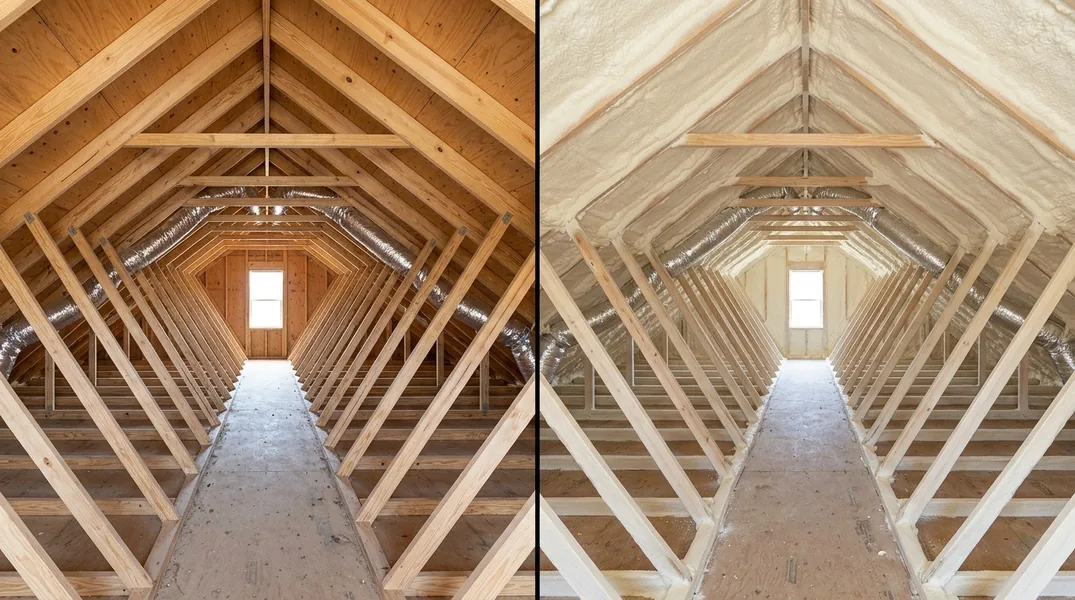
Understanding Spray Foam Insulation Types
When it comes to upgrading your home's insulation, attic spray foam insulation has become one of the most effective solutions for Greensboro homeowners. However, not all spray foam is created equal. The two primary types available today are open cell and closed cell spray foam, and each brings distinct advantages and limitations to the table. Understanding the differences between these two options is essential before making an investment in your home's energy efficiency and comfort.
Spray foam insulation works by expanding when applied, filling gaps, cracks, and cavities that traditional insulation materials often miss. This expansion creates an air-tight seal that reduces heat transfer and air leakage. The key difference between open cell and closed cell lies in their cellular structure and how that structure affects their performance, cost, and suitability for different applications in your attic space.
What Is Open Cell Spray Foam Insulation?
Open Cell Spray Foam Insulation features a cellular structure where the individual cells are not completely enclosed. This creates a softer, more flexible material that allows air and moisture to pass through it. Think of it like a sponge with interconnected pores. Open cell foam has an R-value of approximately 3.5 to 3.6 per inch, which is lower than closed cell alternatives, but it still provides excellent thermal resistance when applied at sufficient thickness.
One of the primary advantages of open cell foam is its lower cost compared to closed cell options. For budget-conscious homeowners in Greensboro looking to improve attic insulation, this can be an attractive starting point. Open cell foam is also an excellent sound dampener, making it ideal if you're concerned about noise transmission through your attic. Additionally, because it allows moisture to pass through, open cell foam is often recommended in climates where vapor management is important, though this characteristic also means it requires proper ventilation in attic applications.
What Is Closed Cell Spray Foam Insulation?
Closed Cell Spray Foam Insulation consists of cells that are completely sealed and densely packed together. This creates a rigid, durable material with a much higher R-value of approximately 6.0 to 6.5 per inch. Because the cells are closed, moisture cannot pass through the foam, making it an excellent vapor barrier on its own. This is particularly valuable for creating what's known as a sealed attic insulation environment.
The closed cell structure provides superior insulating performance, which means you need less thickness to achieve the same R-value compared to open cell foam. This efficiency, combined with its vapor barrier properties, makes closed cell spray foam the preferred choice for creating an unvented attic spray foam application. The material is also more resistant to moisture damage and air infiltration, providing long-term protection for your home's structural integrity. However, this superior performance comes at a higher cost, which is an important consideration when planning your insulation project.
Open Cell vs Closed Cell: Performance Comparison
When comparing these two types directly, the performance differences become clear. Closed cell foam delivers superior insulating power per inch, meaning it reaches higher R-values with less material. If your attic space is limited or you need maximum thermal resistance in a confined area, closed cell is the clear winner. Closed cell also acts as its own vapor barrier, eliminating the need for separate moisture protection, which simplifies installation and reduces potential moisture-related issues down the road.
Open cell foam, while having a lower R-value per inch, still provides excellent insulation when applied at appropriate thicknesses. It excels in soundproofing and is more forgiving during installation due to its flexibility. For homeowners prioritizing cost-effectiveness and acoustic benefits, open cell can be a practical choice. The decision ultimately depends on your specific priorities: maximum thermal efficiency and vapor control (closed cell) versus affordability and noise reduction (open cell).
Attic Spray Foam Insulation Cost in Greensboro: What to Budget
Cost is often the deciding factor for homeowners considering spray foam insulation upgrades. Open cell spray foam typically ranges from $0.50 to $1.00 per board foot, making it the more economical choice for larger attic spaces. Closed cell foam, due to its superior performance and durability, generally costs between $1.00 and $2.00 per board foot or higher, depending on thickness and application complexity. The total investment for your project will depend on your attic's square footage, desired R-value, and the specific type of foam selected.
While closed cell foam has a higher upfront cost, many homeowners find the investment justified by superior energy savings, improved comfort, and the elimination of moisture problems. Open cell foam offers a lower entry point but may require more material to achieve equivalent thermal performance. To get an accurate assessment of what your specific project will cost, it's essential to request a free estimate from a qualified contractor. Greensboro Spray Foam Insulation can evaluate your attic, discuss your goals, and provide transparent pricing based on your unique situation.
Which Type Is Right for Your Greensboro Home?
The choice between open cell and closed cell spray foam depends on several factors specific to your home and situation. If you're building or renovating an attic and want the best possible thermal performance with integrated moisture protection, closed cell is the superior choice. It's especially recommended for creating an unvented attic space where the foam itself serves as the air and moisture barrier. This approach has become increasingly popular in modern home construction because it simplifies building science and provides reliable, long-term performance.
Open cell foam is an excellent choice if you have budget constraints, want to prioritize sound absorption, or have adequate ventilation in your attic space. It works well in many climates and can deliver satisfactory energy savings when applied correctly. The key is ensuring proper ventilation if you choose open cell, as its moisture permeability requires air movement to prevent moisture accumulation.
For homeowners in Greensboro looking to make the best decision, consulting with experienced professionals is invaluable. Every home is different, and factors like your local climate, existing ventilation, attic configuration, and long-term goals all play a role. Contact Greensboro Spray Foam Insulation at (336) 833-1513 to discuss your specific needs and get personalized recommendations for your attic insulation project.
Looking for a professional spray foam insulation contractor in Greensboro? Greensboro Spray Foam Insulation responds fast for all your spray foam insulation needs.
Get a Free Quote